
 Available in US
Content

NHL fractional odds are the UK industry standard for displaying betting prices — figures like 6/4, 5/6, or evens (1/1), where the numerator is the profit on a unit stake and the denominator is the stake itself. The format is older than the league, older than most of the operators using it, and is still how prices on the 1,312 regular-season NHL matches every year are displayed on UK-licensed sportsbooks. The challenge for the modern bettor is not learning fractional odds in isolation — that is a five-minute exercise — but moving cleanly between fractional, decimal, and American formats in a market where price data flows in from multiple international sources at once.
I have been working in UK NHL markets for nine years, and the format question has come up enough that I want to set it out cleanly. Fractional odds are not better or worse than decimal or American — they are a representation, and each format has strengths and weaknesses depending on what the bettor is trying to do. For comparing prices quickly on a live in-play screen, decimal is faster. For traditional UK pricing conventions, fractional is what you will see. For comparing against US-sourced sharp lines, American is essential. This piece walks through how to read the fractional format properly, how to convert between the three, and where the format quirks matter most on NHL props.
The anatomy of a fractional price
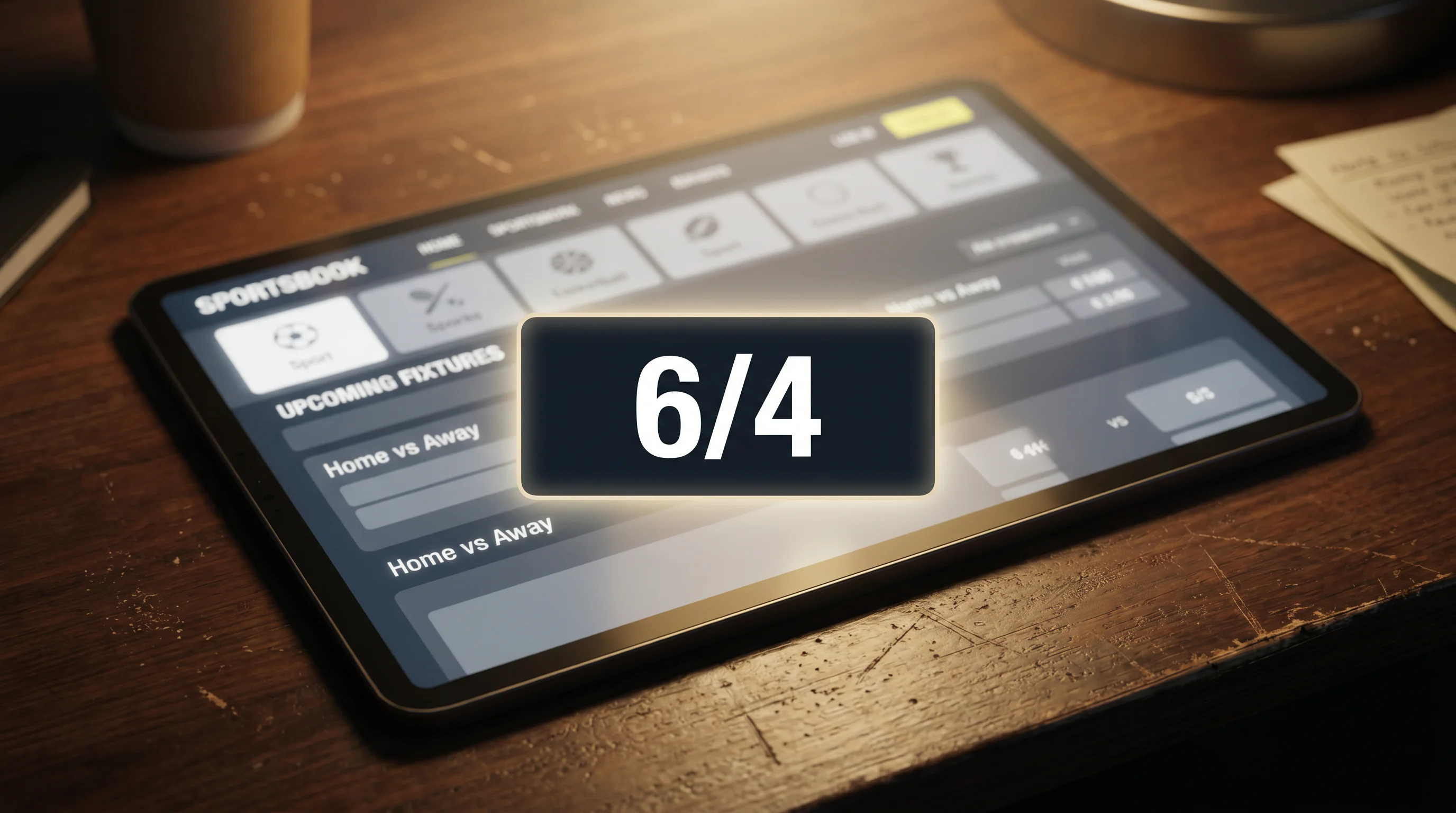
The mechanics of fractional odds are simpler than most people make them. The number on the left is the profit, the number on the right is the stake. 5/2 means £5 profit for every £2 staked — total payout £7 on a £2 stake. 6/4 means £6 profit for every £4 staked, which simplifies to 3/2 but is still often displayed in the 6/4 form by convention. Evens — written 1/1 or sometimes “evs” — means £1 profit for every £1 staked, the same as decimal 2.0 or American plus 100. Odds-on prices are written with the larger number on the right — 4/5 means £4 profit for every £5 staked, which is decimal 1.8 or American minus 125.
The mental model that has served me best is to think of the fractional price as a ratio of risk to reward. 5/2 is a clean way of saying “I am risking two units to win five.” Decimal hides that ratio inside a single number that includes the stake; American hides it inside a sign convention that flips for favourites versus underdogs. Fractional makes the trade visible. The drawback is that fast comparison is harder — comparing 11/8 to 7/5 to 13/10 in your head during a live market that is moving second-by-second is genuinely cognitively expensive, and that is where decimal earns its place on in-play screens.
Converting fractional to decimal
The conversion from fractional to decimal is straightforward arithmetic — divide the numerator by the denominator, add one. 6/4 becomes 6 divided by 4, which is 1.5, plus 1, which is 2.5. 5/2 becomes 5 divided by 2, plus 1, which is 3.5. 4/5 becomes 4 divided by 5, plus 1, which is 1.8. The “plus one” step is what turns a profit ratio into a total payout multiplier, which is what decimal odds represent. The Fitzdares chief executive William Woodhams summed up the broader landscape when the major reform settled in — “Ultimately we have spent five years preparing for this day and there are no major surprises … I really hope a line can be drawn now and the UK can get back to seeing betting as the fun and brilliant past time that it is.” The market matured. The format conventions did not.

Decimal’s advantage is speed of comparison and a clean conversion to implied probability — implied probability is simply 1 divided by the decimal price, expressed as a percentage. A decimal 2.5 price implies a 40 percent probability. A decimal 1.8 price implies 55.6 percent. The same calculation in fractional requires the conversion step first, which is why most serious comparison work happens in decimal even at sportsbooks that display prices fractionally by default. The good news is that UK sportsbooks now almost universally offer a fractional-decimal toggle in account settings, so you can flip between formats based on what you are doing rather than committing to one for life.
Converting fractional to American
Converting fractional to American is the conversion most UK bettors encounter when reading US-sourced NHL analysis. The mechanics depend on whether the fractional price is above or below evens. For prices above evens — 5/2, 6/4, 7/1 — the American equivalent is the fractional simplified to a decimal numerator over 1, then multiplied by 100. 5/2 becomes plus 250. 7/1 becomes plus 700. For prices below evens — 4/5, 1/2, 4/7 — the American equivalent is minus 100 divided by the fractional simplified to decimal form. 4/5 becomes minus 125. 1/2 becomes minus 200.
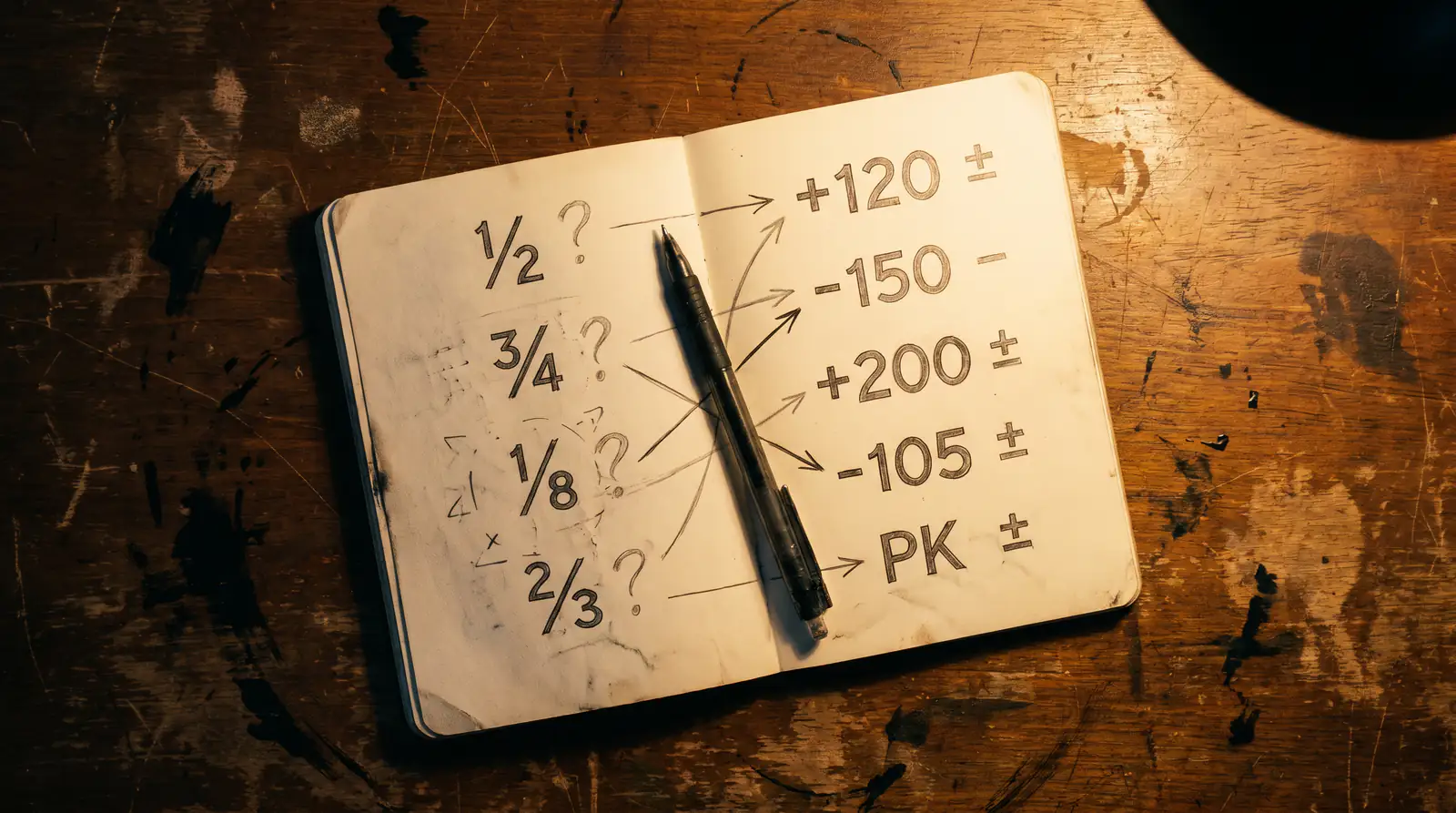
The reason this conversion matters is that the bulk of NHL analytical writing comes out of US sources where the American format is standard, and any UK bettor wanting to use that analysis productively needs to translate cleanly. A puck line at minus 110 in the US is 10/11 in UK fractional or 1.909 in decimal — the same price, three different costumes. The conversion stops being a chore once the muscle memory is built, which is about three weeks of consistent comparison. The conversions worth committing to memory are the common round-number prices — minus 110 is 10/11, minus 120 is 5/6, minus 150 is 4/6, plus 110 is 11/10, plus 120 is 6/5, plus 150 is 6/4 — and the rest can be calculated on the fly.
Fractional odds on NHL props
Player prop markets are where the fractional convention shows its age. Goal scorer markets in particular are priced at higher implied probabilities than most other NHL markets — an anytime goal scorer prop on a top-line forward might trade at 6/4 or 7/4 — and the convention of using rougher fractions to display them produces small but real rounding effects. A 6/4 price is decimal 2.5 and implied probability 40 percent. A 11/8 price is decimal 2.375 and implied probability 42.1 percent. The two prices are clearly different — over a hundred bets, the difference between 40 percent and 42.1 percent implied probability is substantial — but they are visually similar enough on a fractional screen that less careful comparison misses the gap. This is one of the structural reasons disciplined price comparison across sportsbooks matters, and why my workflow on these markets relies on the habit I lay out in detail in my piece on how multi-book NHL line shopping compounds into real ROI.

The other prop-specific quirk is that UK sportsbooks frequently round fractional prices to “tidy” denominators — 6/4 instead of 25/17, 11/8 instead of 25/18 — which can mean the displayed price is marginally rounded against the customer compared to a precise decimal calculation. The rounding is small but consistent, and over hundreds of NHL prop tickets, taking the time to convert to decimal and check that the price you are getting is the price the sharp market is offering pays back the effort. Some operators handle this better than others, and the better operators tend to display both fractional and decimal forms on the same screen — which is what you want if you are doing serious comparison work.
The fractional read I run before any UK NHL ticket
Across nine years of UK NHL pricing work, the format question has stayed simpler than most people fear and more consequential than most people respect. Fractional odds are the UK convention, decimal is the comparison workhorse, and American is the analytical bridge. The check I run before every ticket is one quick conversion — what is the decimal price, what is the implied probability, and is the operator’s price equal to or better than the consensus close I have logged. That conversion takes ten seconds once the habit is built. It catches the rounding errors that fractional display sometimes hides, and it makes any comparison across multiple UK sportsbooks meaningful in a way that pure fractional comparison is not. The format is neutral. The discipline of conversion is what produces the edge.

Why are UK NHL fractional odds harder to read during fast in-play markets?
Comparing fractional prices like 11/8 to 7/5 requires arithmetic in your head. Decimal lets you compare prices by reading the number directly. Most serious UK bettors switch to decimal for in-play work even at sportsbooks that default to fractional.
What does NHL evens (1/1) actually pay on a £20 stake?
A £20 stake at evens returns £40 if the bet wins — £20 stake back plus £20 profit. In decimal terms evens is 2.0; in American it is plus 100. Same price, three display formats.
