
 Available in US
Content

The first NHL player props bet I ever placed was on Nikita Kucherov to record over 1.5 points against Florida, and I lost it in the opening period when he left injured after a hit along the boards. That was nine years ago, and I still remember watching the moneyline I had ignored cash out for the team I had backed, while my prop ticket went to scratch. NHL player props are bets tied to one skater or goaltender’s individual output inside a single match, detached from whether the team wins or loses, and the freedom that gives you is also the trap that catches most newcomers.
When I talk about NHL player props with UK bettors who have come over from football, the part they keep tripping on is independence. A Manchester City punter who buys Erling Haaland to score anytime is still rooting for a City win. An NHL prop trader doesn’t need that. You can back Connor McDavid for over 3.5 shots on goal, watch the Oilers lose 5-2, and cash your ticket without a thought for the scoreboard. The market treats every skater and every goalie as a self-contained line, priced off recent form, opponent strength, ice-time forecast and matchup history. The Kucherov line in particular has been one of the most active prop markets in North American books for two seasons running — he led the league with 121 points in 2024/25, and the over on his points prop became its own weather system every night.
What I want to do across the next few thousand words is walk you through every prop family I trade myself — skater goals, shots on goal, points, goaltender saves, win props and the shutout markets — then talk about the multi-leg products UK books have built around them and the very specific pitfalls that can ruin a ticket before puck drop. I’m not going to hand you a chase list. I’m going to give you the framework I rebuilt after that Kucherov ticket nine years ago, the one that has kept me trading NHL player props at a modest edge ever since.
The Three Branches of the NHL Prop Tree
If you opened any major UK sportsbook on a Tuesday in February and clicked into an NHL game, you would see roughly forty player markets stacked up before you even reach the totals. That number can look overwhelming, but every single one of them sits on one of three branches — skater markets, goaltender markets, or multi-leg builders that bolt them together. Once you can place a market on the correct branch in your head, you stop reading the prop screen and start filtering it.
Skater markets — goals, assists, points
Skater markets are the ones a football bettor recognises fastest. Anytime goal scorer behaves like first goalscorer in football, except the binary nature is a little softer because hockey averages around six goals a game and rosters dress eighteen skaters. Assist markets are the close cousin and pay out on either primary or secondary helpers, depending on the book’s settlement rules — I always check that line in the rules tab before I even price the market, because two UK books that look identical on the surface can differ on whether a secondary assist counts. Points props are the umbrella over both, settling on any combination of goals and assists. When Leon Draisaitl scored 52 goals in 2024/25 to top the league, the goal-prop market on him every night was effectively a live trading screen — books moved the line up to over 0.5 goals at heavy juice on more than half his appearances.

Goaltender markets — saves and shutouts
Goaltender props live on a different curve. A goalie isn’t shooting at anything, he’s reacting to volume, so his markets are over-under save totals, win props, and the longshot shutout market. Where a skater market reacts to ice time and shot quality, a goalie market reacts to the opponent’s shot generation and his own team’s defensive scheme. That makes the inputs cleaner — fewer variables, more numeric — and is the reason most professional NHL bettors I know lean heavily into the goalie side of the prop screen. The starter announcement is the single most price-sensitive event in NHL betting, and books that publish goalie props before the morning skate routinely repost the line within minutes once the starter is confirmed.

Multi-leg props and player parlays
The third branch is the one UK books have invested the most in over the last three seasons. Same-game parlays were a North American innovation, but the major British operators have built equivalent products — Bet Builders, Same Game Multis, Prop Builders — that let you combine two or more player legs from the same match into one ticket. A typical example: McDavid over 0.5 goals, Draisaitl over 2.5 shots, and Edmonton over 5.5 total goals, all rolled into a 9/1 same-game ticket. The maths behind these builders is heavily correlation-adjusted by the book, which means the price you see is rarely the raw multiplication of the legs. We’ll come back to that in the multi-leg section, because the gap between the offered price and the fair price is where most builder profit either appears or evaporates.
Why a Prop Number Isn’t a Probability
The first time a sharp NHL trader friend looked over my shoulder at a prop screen and asked me what -135 actually meant for Hellebuyck over 27.5 saves, I gave him the implied probability and he told me to stop reading prop odds that way. Prop pricing is a different animal from team-market pricing — the spread is wider, the juice is heavier, and the line itself is often the question, not the price next to it. Once you understand the why, the entire prop screen reorganises in front of you.
Understanding the prop spread vs binary props
A binary prop is a yes-no market — anytime goal scorer is binary, shutout yes-no is binary. A spread prop, on the other hand, asks you to bet whether a count will go over or under a line — over 2.5 shots on goal, under 27.5 saves. The maths is fundamentally different. A binary prop is priced off a single probability, which the book then loads with juice on both sides. A spread prop is priced off a distribution — the book is forecasting not just whether a player will hit a number, but the shape of every possible outcome around it. That’s why a 0.5 line and a 3.5 line on the same skater look like completely separate markets with separate price elasticities. When I’m shopping shots on goal across UK books, the line itself — 2.5, 3.0 or 3.5 — is the variable that matters more than the price.
Why prop juice is heavier than team markets
The vig on an NHL moneyline sits around four to six percent on the standard chalk side. The vig on an NHL player prop routinely sits at eight to twelve percent on both sides, and on goaltender win props it can push higher. That gap exists because props are lower-liquidity markets — fewer bettors, less sharp action to correct mispricings, and a smaller pool of professional traders willing to bet into them. The book builds in a larger margin because the book itself is less confident in its own line. That cuts both ways for the bettor. The higher margin makes the average ticket worse, but the looser pricing means that when you do find a genuine edge, the edge is larger than anything you’d find on the moneyline. Most of my own prop profit over the last nine years has come from a small handful of skater markets where the line lagged a usage change by twenty-four hours.
Reading UK fractional notation on props
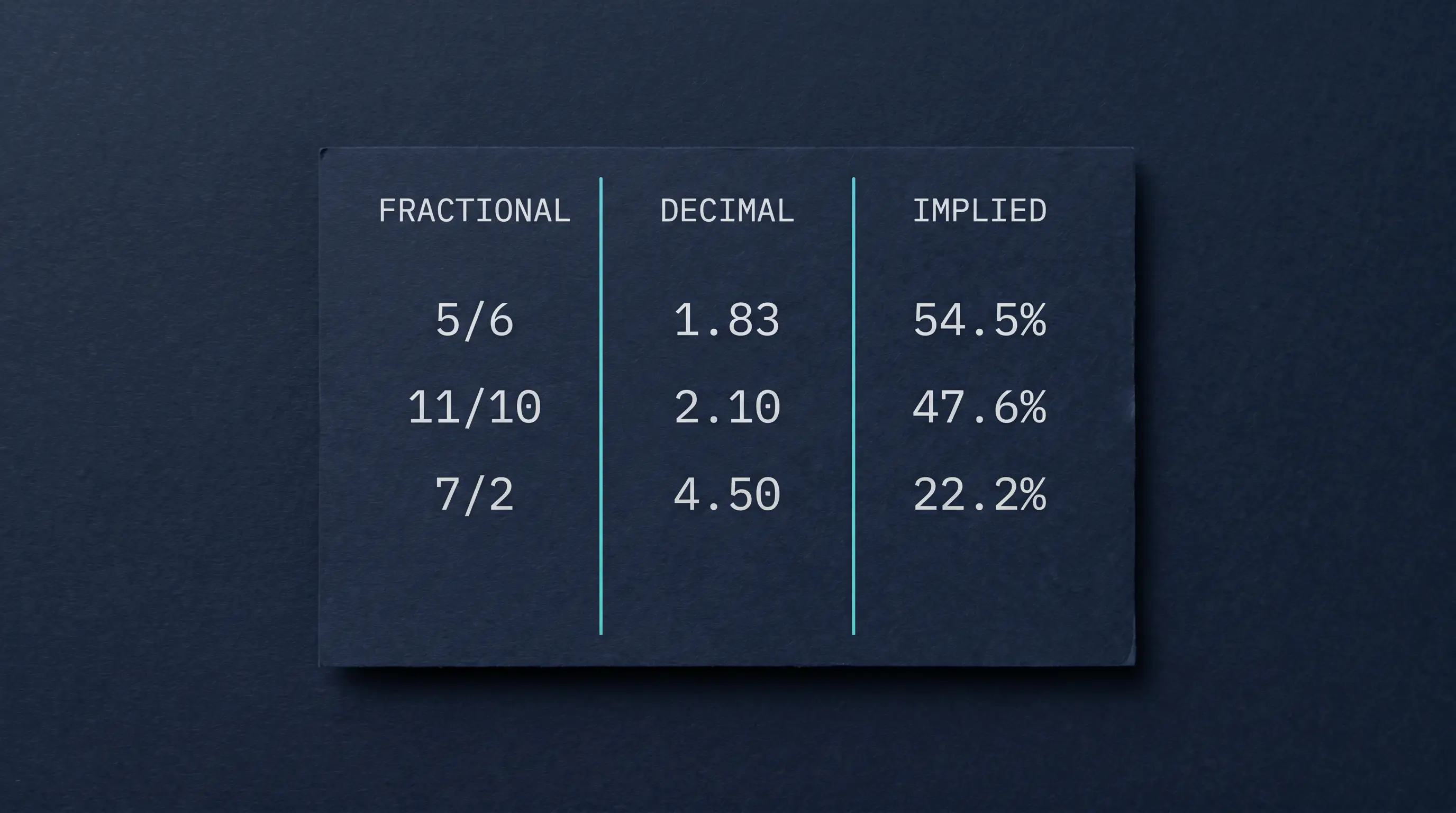
UK sportsbooks default to fractional pricing on most prop markets, which catches out bettors who learned the trade on North American platforms. A skater priced at 5/6 to score anytime is offered at decimal 1.83 — roughly -120 in American terms. A backup goalie at 7/2 to record a shutout is decimal 4.50 — roughly +350. The conversion isn’t difficult, but the trap is that fractional pricing rounds harder than decimal. The book quotes 5/6 instead of 0.83, but the true price might be 0.85 or 0.81. On a low-juice market that wouldn’t matter. On a heavy-juice prop, the rounding can swing the no-vig fair price by two or three percent, which is the entire edge you were looking for. I keep a decimal converter open in another browser tab whenever I’m seriously trading UK props.
Skater Props in the Order I Actually Trade Them
There’s a hierarchy among skater props that you only learn by losing money in the wrong order. When I started out, I bet anytime goal scorer like it was the obvious entry point — and it is, but it’s also the prop family with the heaviest juice and the shortest list of clean edges. Now, after nine years, my skater prop screen on a typical night gets attacked from a completely different angle. Shots on goal first, points second, anytime goal scorer third. Here is why.
Anytime goal scorer — the entry-level prop
The anytime goal scorer market is where most UK bettors meet NHL props for the first time, usually because it reads exactly like football’s first goalscorer market. A top-line forward will price around 2/1 to score on a typical night — about a thirty-three percent implied probability. The line on a third-pair defenceman might sit at 18/1, around five percent. The trouble with the anytime market is that the book has hammered it for years, and the lines are about as efficient as any prop on the screen. The only consistent way I find value here is on second-line wingers who have just moved up to the top power-play unit and haven’t repriced yet. If you want to dig deeper into how I structure goal-scorer plays around line shuffles and power-play time, I wrote a full anytime scorer playbook that breaks down the timing windows and which usage signals actually shift the true price.
Shots on goal — the volume play
Shots on goal is the cleanest skater market on the screen, and I trade it more than every other prop family combined. The reason is structural — a shot only requires a player to throw the puck on net, and volume tracks ice time, role and shot-attempt rate almost linearly. Those inputs are public and slow-moving. Kucherov averaged about 3.6 shots per game across his 121-point campaign in 2024/25, which made his over 3.5 line a fifty-fifty proposition — heavily dependent on whether the book overpriced the chalk to -140 or held it near -110. Draisaitl, with 52 goals coming off a similar shot volume, was a different profile: lower shot count, higher conversion rate, which made his goal prop the better play.
Points props — combining goals and assists
Points props sit between the volume of shots on goal and the binary nature of goals. They’re an aggregate market — over 0.5 points, over 1.5 points, over 2.5 points — and they reward bettors who can model creation rather than finishing. Kucherov is the textbook case: a player whose point totals are driven more by primary assists on power-play one-timers than by his own shooting. His over 1.5 points line on a typical night sat at -115 to +105, and the value moved with power-play opportunity forecasts rather than his individual shooting form. When you can identify a high-creation player against a team that takes a lot of penalties, points props become one of the few skater markets where I’m comfortable taking the chalk at heavy juice.
The Goalie Screen, Read Like a Trader
Goaltender props are where I make most of my prop money, and the reason is simple — a goalie is a single point of failure or success for forty to sixty minutes of hockey, and his line is built off opponent shot-generation data that anyone with an internet connection can pull. The market for goalie props is also less crowded with recreational money, which means the lines react more honestly to information rather than to public sentiment. There are three goaltender markets I trade actively — save totals, win props, and the shutout longshot — and they each behave differently enough to deserve their own treatment.
Save totals — over/under shots faced
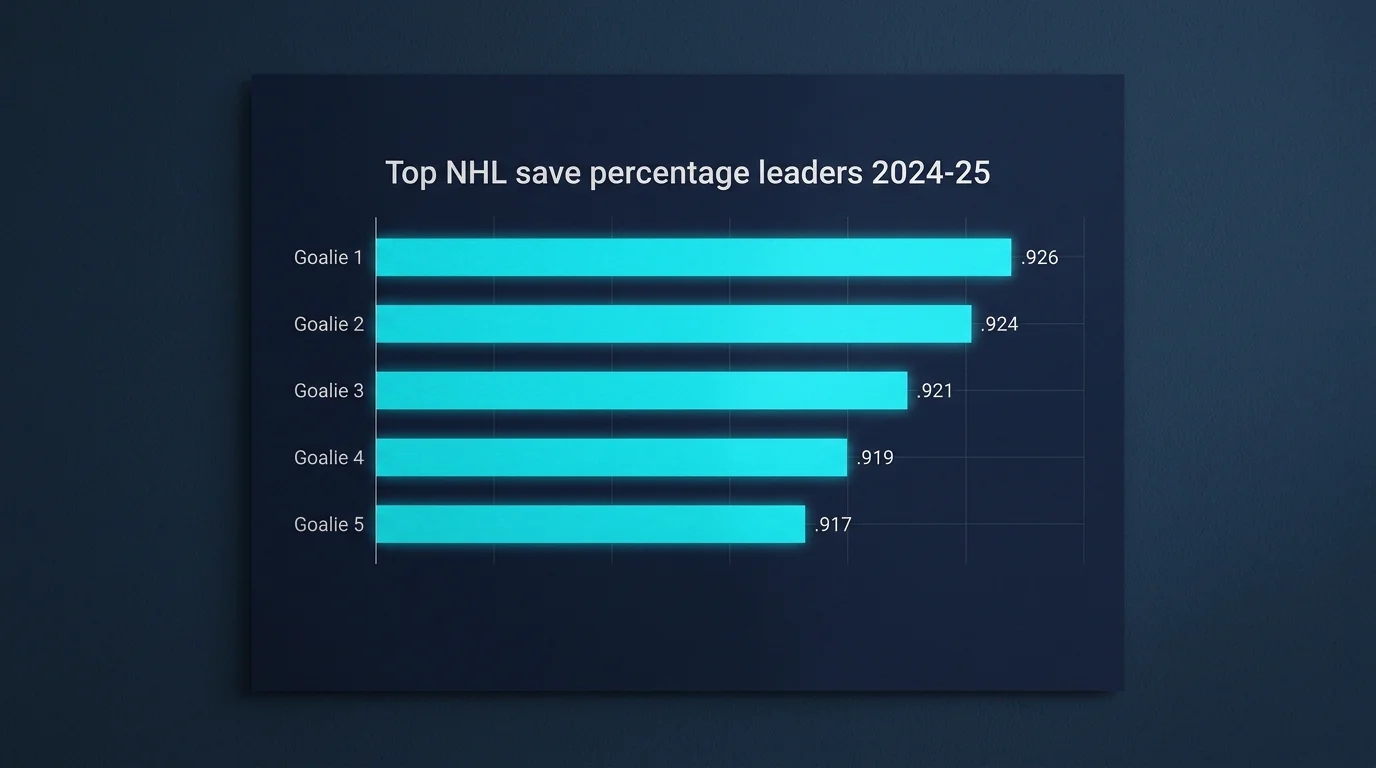
Save totals are the goalie equivalent of shots on goal for skaters. The book is publishing a number — over 27.5 saves, over 31.5 saves — and asking you to forecast the volume of shots the goalie will face against a specific opponent. Connor Hellebuyck won 47 games for Winnipeg in 2024/25 with a 2.01 goals-against average, but his save totals weren’t huge because Winnipeg was a top-five defensive team that allowed the league’s fourth-lowest shot rate. Hellebuyck was, statistically, the best goalie in the league last season, but his save props consistently settled under because he simply wasn’t facing the volume. That’s the central insight on save totals — you’re not betting on goalie quality, you’re betting on opponent shot generation against the goalie’s team-level shot suppression. Anthony Stolarz, with the .926 save percentage that led the entire NHL in 2024/25, presented the opposite profile in Toronto: a high-volume team behind him meant his over-27.5 line landed regularly even when Toronto won 4-2.
Win props for elite starters
Goalie win props are a slightly distorted moneyline. They settle yes if the goalie’s team wins in regulation or overtime and he is the goalie of record. Pulled in the third with a one-goal lead, you still cash. The market is priced close to the team moneyline, shaded slightly toward the under because of the small probability of an injury or pull. For elite starters, the win-prop market is where I look when the team moneyline is mispriced by the public. Dustin Saracini, the Sportsbook Review analyst, said it perfectly during this year’s Stanley Cup run: “I think you have to be crazy to bet against the Vegas Golden Knights right now, and at +125, they’re as good a bet as any. They might just be the deepest team left, with the goaltending to back them up.” That’s the read — depth and goaltending move the win-prop market more than offence does, because the goalie has to be on the ice at the final buzzer.
Shutout markets — the longshot play
The shutout market is where prop bettors go hunting for season-defining payouts. A starting goalie’s price to record a shutout on any given night usually sits at 8/1 to 12/1 — roughly eight to twelve percent implied probability. The league-wide shutout rate is around six to eight percent, which means the market is consistently priced against the bettor unless you can identify a specific edge. Where the value lives is in the matchup combination — an elite goaltender against a team that has lost both top-six centres to injury, playing the second night of a back-to-back. Those filters knock the opponent’s expected goals down toward 1.5, and the implied shutout probability climbs toward fifteen percent. Against an 11/1 line, that’s a clean edge. I bet shutouts maybe twice a month, and I treat them as small-stake longshot tickets — they’re not a core part of the strategy, but they pay enough when they hit to fund the volume on the save-total side.
Building Prop Tickets That Aren’t Just Hopes
Same-game multis are the most heavily marketed product on every UK sportsbook screen right now, and the prop builder is the version most NHL bettors interact with. The pitch is compelling — three legs in one game for a 9/1 price that would have looked like a fairy tale on a parlay screen five years ago. The reality is more nuanced, and once you understand how UK books actually price these things, you can decide which builder tickets are worth your stake and which are just dressed-up juice.
Player parlays — two skaters, one ticket
A two-skater parlay is the cleanest version of the builder concept — over 0.5 goals on McDavid and over 0.5 goals on Draisaitl, for instance, priced as a same-game multi. The book’s correlation engine knows those two outcomes are positively correlated — when one Oilers star scores, the team is generally playing well and the other has a higher conversion probability — so the offered price will be shorter than the raw multiplication of the legs would suggest. That correlation adjustment costs the bettor on positively correlated legs and benefits them on negatively correlated ones. A builder combining over on shots for Forward A and under on saves for the opposing goalie is a positively correlated ticket the book will shade against you. A builder combining anytime goal scorer on Forward A and ‘no shutout’ on the opposing goalie is the same logical bet expressed twice, which the book will reject outright.
Combining props with totals
Mixing skater props with team totals is where I find most of my builder edges. The classic example is a high-event game between two run-and-gun teams — Edmonton against Toronto, for instance — where I want exposure to a total over 6.5 and to Draisaitl’s over 2.5 shots in the same ticket. The team total and the shot total are linked but not identical, and the book’s correlation adjustment is usually conservative because team-skater correlations are harder to model than skater-skater. The result is a builder where the price often comes in marginally generous, which is exactly the gap the recreational builder market doesn’t notice.
UK bookmakers and prebuilt prop builders
Every major UK bookmaker now publishes prebuilt builders for marquee games — three-leg tickets the trading desk has constructed and priced at promotional odds. The marketing copy will frame these as “expert picks”, but they are price-shaped products, not insight products. The trading desk has identified three legs where their model says the public will accept the offered price, and they’ve packaged them at a number that protects the book’s edge. Some prebuilts are well-priced — I’ve taken a few in playoff games — but treat them the same way you’d treat a “lock of the day” tip: an interesting starting point, not a finished idea. Build your own multis from the legs you’ve already priced individually.
The Prop Mistakes I Made That You Don’t Have To
I’ve had three losing months on NHL props in nine years, and all three came from the same category of error — variance I didn’t price into the ticket. Late scratches, backup goalies, and heavy juice that masquerades as a tight line. None of these are exotic problems. They’re the slow leaks that drain a prop bankroll quietly, and most bettors never trace the loss back to the specific source. Here are the three I’d want my younger self to read before placing a single prop ticket.
Late scratches and props
A late scratch is when a player is removed from the lineup after the prop market has been posted but before puck drop. Different UK books handle this differently — some void the bet, some settle as a loss, some push to a different player on the same line. Bet365 voids unplayed-player props if the scratch is announced at least an hour before puck drop. William Hill voids them up to the moment the puck drops. The variance between books is exactly the kind of detail that becomes a personal problem at the worst possible moment. I lost that very first Kucherov ticket nine years ago partly because I hadn’t read the void rules — and although that one was an in-game injury rather than a pregame scratch, the lesson scaled. Always check the player participation rule before you bet a prop on a player coming back from injury or playing on a back-to-back, because the asymmetry between void and loss is where the slow leak begins.

Why backup goalies break the market
Goalie props are exquisitely sensitive to the starter announcement, and the announcement timing varies by team. Some coaches confirm the starter at the morning skate — typically two to three hours before puck drop. Some wait until forty minutes before the game. If you’ve taken a save-total over on the projected starter and the backup goes in instead, the market repositions instantly and your line is suddenly fifteen percent off. Books usually void unplayed-goalie props if the wrong goalie starts, but the rule isn’t universal, and the action-style props that pay out regardless of who plays will hit you on the wrong side of an unannounced switch. The fix is simple — wait for the starter announcement before you bet goalie props on teams with goalie-rotation uncertainty, and accept that you’ll miss some price movement in exchange for not blowing up tickets on a coach’s whim.
Heavy juice traps
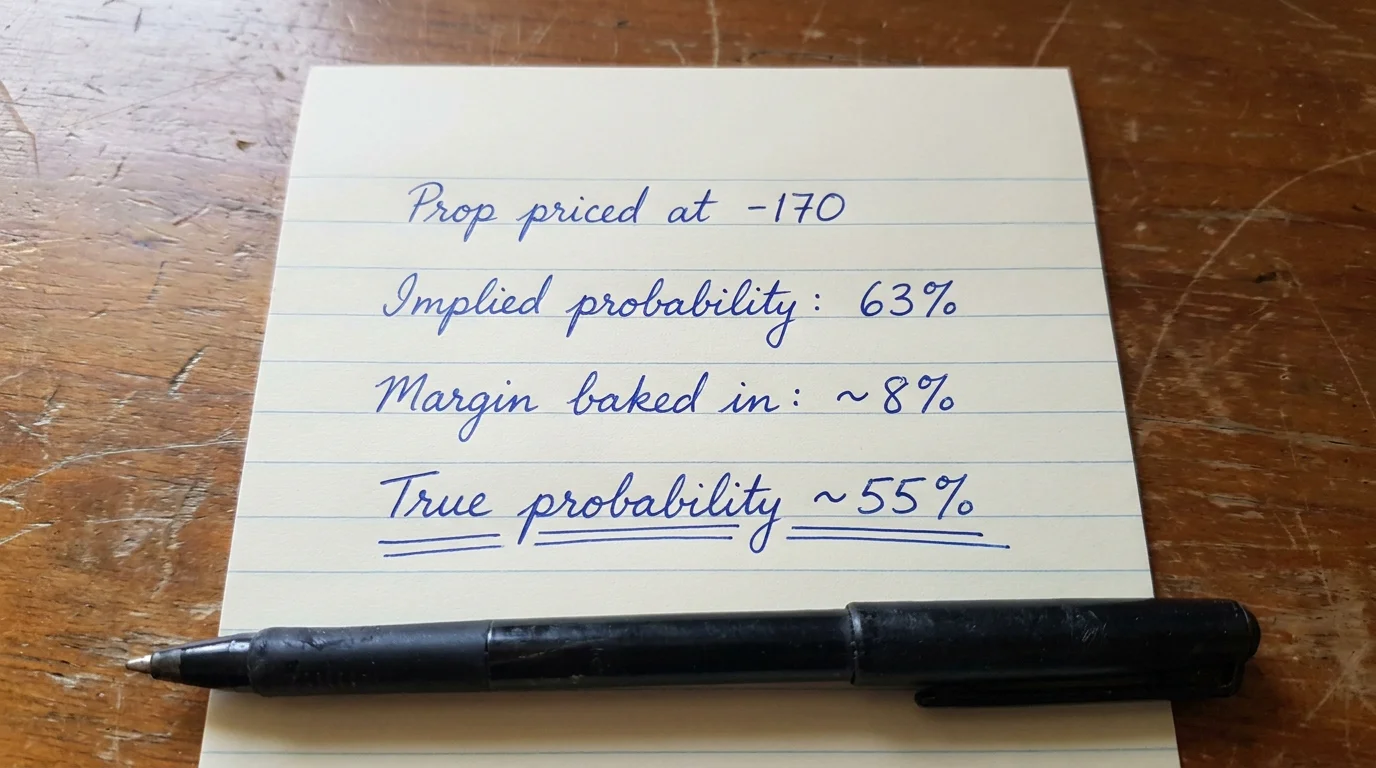
The third leak is the heaviest, and it disguises itself as a sensible bet. A skater prop at -170 looks like a confident, tight market. It isn’t. A -170 line on a binary prop is sixty-three percent implied probability with eight to ten percent of margin baked in, which means the true probability the book is pricing is closer to fifty-five. If you don’t have a model that says the true probability is above sixty-three, you’re not betting an edge, you’re betting a feeling. The heavy-juice trap is the single most common reason recreational prop bettors lose money slowly across a season — they pick the right outcome at the wrong price, and the cumulative drag from the juice swallows the wins. The discipline is simple but unpleasant: if you can’t beat the implied probability on paper before you place the ticket, you don’t take the ticket.
The Prop-by-Prop Filter I Use Every Slate
The framework I’ve laid out collapses into a short mental checklist before every NHL prop ticket. The first filter is the market category — skater volume, goaltender volume, binary scorer, or multi-leg builder. Each branch has its own price logic, and confusing them is the fastest way to misprice your own ticket. The second filter is line confirmation — has the starter been announced, are the projected linemates intact, has the player skated in the morning session? Prop markets reward the bettor who waits for confirmation more than any other corner of NHL betting.
The third filter is juice. I won’t bet a prop at worse than -130 unless I have a hard modelled probability that beats fifty-seven percent. The heavy-juice trap is the slow leak that ends prop seasons in red, and the discipline to walk away from a -170 prop you think is the right side is what separates a profitable prop trader from a recreational one. The fourth filter is correlation when I’m building same-game tickets. If two legs are positively correlated, the book has shaded the price against me. If they’re negatively correlated, the book has shaded it toward me.
NHL player props gave me my worst night of betting in nine years, on that opening Kucherov ticket, and they have given me my steadiest edge in the eight seasons since. Treat every prop screen as a forty-line trading sheet rather than a menu of picks, and the screen stops being intimidating and starts being useful.
Do NHL player props void if the player is scratched on game day?
It depends on the UK bookmaker and the timing. Most major UK operators void player prop bets if the player does not take a single shift in the game, refunding the stake. Some books require an announcement before puck drop for the void to apply, while others void retroactively if the player is on the ice for fewer than a minute. Always read the player participation rule in the bookmaker’s NHL settlement section before betting on a player returning from injury.
How are NHL goalie save total props graded if the starter is pulled in the second period?
If the starting goalie is pulled mid-game, the save total prop usually settles based on the saves recorded by that specific goalie up to the moment he left the ice — not the team’s total saves. So an over 27.5 saves bet on a goalie who is pulled after making 18 saves will lose, regardless of what the backup does for the rest of the game. A handful of UK books offer action-style settlement where the prop is voided if the goalie does not play the full game, but the default is goalie-only counting.
What is the difference between anytime, first and last goal-scorer props?
Anytime goal scorer settles yes if the named player scores at any point during regulation or overtime — the most common and forgiving version. First goal scorer requires the player to score the very first goal of the game and pays at substantially longer odds because of the binary nature. Last goal scorer settles on whoever scores the final goal of the game, including overtime. First and last markets are typically priced four to six times longer than anytime and are best treated as small-stake speculative tickets rather than core prop plays.
Why are NHL player props often softer than the moneyline?
Player prop markets attract less liquidity than moneylines and totals — fewer bettors place them, fewer sharps trade them, and the bookmaker’s trading desk has less corrective action to refine the line. The book responds by widening the margin and posting a less-confident price. That makes the average prop ticket worse value than a moneyline ticket, but it also means genuine mispricings — driven by usage shifts, lineup changes or recent form — are larger and slower to close on prop markets than on team markets.
