
 Available in US
Content

The single biggest contributor to my NHL betting ROI across nine seasons isn’t a model, isn’t an angle, isn’t a system. It’s the boring habit of checking the same bet across five UK sportsbooks before placing it. That habit alone — line shopping — has added roughly two and a half percentage points to my long-term return rate, which compounds into something significant across a 1,312-match season. It isn’t glamorous. It isn’t fast. It works.
NHL line shopping is the practice of comparing the price for a single bet across multiple UK-licensed operators and placing the wager wherever the price is best. The crucial difference from a single-book approach is that line shopping captures market-wide pricing inefficiency rather than betting on whatever line the one chosen book has posted. The same Boston moneyline can be 4/6 on one operator, 8/11 on another, and 4/5 on a third — and a punter who consistently takes the longest price across the slate is collecting a structural edge that a single-book punter never sees.
The infrastructure for line shopping exists in the UK because the regulated betting and gaming sector serves roughly 22.5 million adults monthly, which means there’s enough operator competition to produce real price dispersion on every market. UK punters have access to 30+ UKGC-licensed sportsbooks, with the largest dozen carrying full NHL coverage. That dispersion is the line shopper’s raw material, and converting it into ROI is mostly a discipline problem rather than a knowledge problem.
Why line shopping matters more than handicapping for most punters
Here’s the uncomfortable truth about NHL betting at the UK retail level: most punters cannot consistently beat the closing line on their own analysis. The market is efficient enough, with enough sharp money flowing into it, that the average UK retail punter is closer to a coin-flip on individual market direction than to a sustained edge. What separates the long-term winners from the long-term losers among those punters is not predictive skill — it’s price.
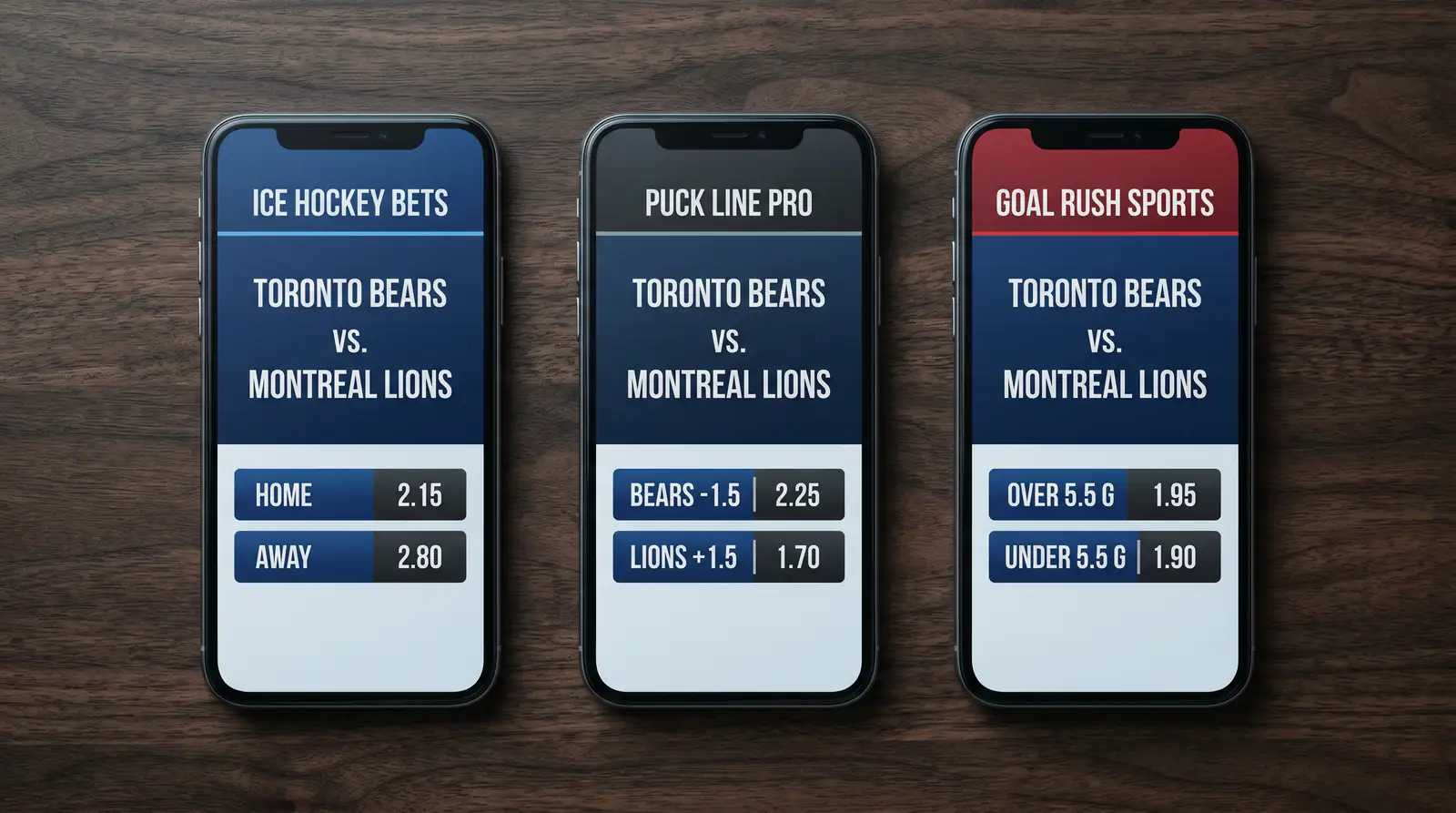
Take a concrete worked example. A punter who is genuinely 50% accurate on his picks but consistently takes the longest available price across UK books will average roughly +103 in American-odds terms on his bets, where the equivalent single-book punter would have averaged –110. That two-point pricing improvement, applied across a 500-bet season, is the difference between net profit and routine loss. The handicapping skill is identical; the line shopping discipline is what determines the outcome.
The reason line shopping works at all is that UK sportsbooks don’t share pricing models. Each operator runs its own oddsmaking team, with its own data sources, its own public-bet exposure, and its own risk tolerance. When one book is exposed to heavy public money on the favourite, that book shortens the favourite and lengthens the underdog. The book down the road, with different exposure, prices the same matchup differently. The dispersion isn’t error — it’s structural, and it persists because operators have no incentive to converge.
The other reason line shopping works is that books have different appetites for different markets. Some operators specialise in heavy moneyline volume and price totals more conservatively. Others lean into player props with aggressive pricing on shots and goals. Knowing which book reliably hangs the longest prices on which markets compounds the basic line-shopping edge, and the differentiation among UK sportsbooks is large enough that an experienced shopper builds a mental map of who’s longest on what.
The concrete edge that line shopping adds to your ROI
Across nine seasons of tracked NHL bets, my own line shopping data shows an average price improvement of 2.3% — that is, the prices I actually took were on average 2.3% longer than the prices available at a single arbitrarily-chosen reference operator. Across a 500-bet season at flat 1-unit stakes, that price improvement is worth roughly 11–12 units of pure ROI, before any handicapping skill enters the equation.

The 2.3% number isn’t unique to me. Industry-tracked benchmarks from professional NHL bettors put the line shopping value at 2–3% per bet, depending on the breadth of operator coverage and the markets played. Punters who shop across three or four UK books typically capture the lower end of the range; punters who maintain accounts across eight to twelve operators capture the upper end.
The biggest gains come on less liquid markets. Standard moneylines on top matchups vary little across operators because the volume on those markets keeps prices anchored. Player props, alternative puck lines, period totals, and specialised futures show much wider price dispersion — sometimes 5–10% between the longest and shortest UK price for the same proposition. A line shopper who skips moneylines and focuses operator-comparison work on the higher-dispersion markets captures multiples of the average price-improvement rate.
The compounding side matters for serious punters. Line shopping ROI doesn’t just add to handicapping ROI; it multiplies the value of every other piece of analysis you do. A handicapping model with a true 3% edge per bet becomes a 5.3% edge per bet when paired with disciplined line shopping. The same model with no line shopping is a 3% edge per bet. The model didn’t change. The price did. That price improvement is also the only objective measure of whether your betting decisions are improving over time, which I cover at length in my piece on why closing line value is the sharp’s truest skill metric, where the relationship between line-shopping execution and closing-line beats becomes the foundation of any serious skill audit.
How a multi-account UK strategy actually works in practice
Building a functional line shopping infrastructure in the UK starts with account spread. The minimum viable setup is three operators; the practical optimum is eight to twelve. Beyond twelve, the marginal price-improvement gains drop sharply because the operators outside that top tier rarely hang prices that beat the leaders on more than the occasional market.
The accounts should be live and funded across all of them. A line shopping system that requires you to deposit before every bet collapses the moment a price moves in the two minutes it takes to fund a wallet. I keep small but functional balances across every operator, with my main bankroll cycled through deposits as needed but never concentrated entirely on one book. The flexibility costs nothing and saves money every week.

Verification and KYC processes are worth completing in advance, before you need to place a bet. Most UK operators now apply identity verification immediately on account opening, but a few still defer it until first withdrawal. A line shopper who needs to withdraw from operator C to fund operator A’s deposit and then has to wait three working days for verification has effectively lost access to the line shopping system for that period. Front-load the admin.
The operational rhythm is straightforward once the accounts are live. For each bet I want to place, I check the price across my full operator stable using either a free aggregator tool or a quick browser cycle through my saved tabs. The cycle takes 90 seconds for a single bet, two minutes for a parlay leg with multiple components, and slightly longer for complex props where individual operator product coverage varies. Time is the real cost of line shopping; nothing else.
One important constraint: UK operators retain the right to limit accounts that consistently beat them on price. This is a real risk for the most successful line shoppers, and the limiting can happen quietly — a request to bet £200 on a moneyline gets rejected at £25, with no explanation. The defence is operator spread itself. A punter with eight active accounts can absorb three limits and still have a functional line shopping system. A punter with three accounts loses two-thirds of his capacity to the same limiting and has to rebuild.
The tools, the discipline, and the small mistakes that erode the edge
The tooling for line shopping in the UK has improved sharply over the past four seasons. Free comparison aggregators publish near-real-time prices across most UKGC operators; subscription products extend the coverage further into less popular markets and offer historical line-movement data that helps identify which operators are slowest to react to news. I run a mix of free and paid tooling — the free tooling covers 80% of my routine bets, the paid tooling pays for itself on the harder-to-shop props and futures markets.
The discipline side is where most punters lose the edge they could otherwise capture. Three specific mistakes erode line shopping returns. First, sentiment-based account selection — placing the bet with the operator you usually use rather than the operator with the longest price, because you’ve already logged in there or because their interface is familiar. Second, ignoring small price differences as “not worth the effort” — a price difference of 1/20 of a fractional unit looks tiny in isolation but adds up to a meaningful ROI contributor across hundreds of bets. Third, taking the second-longest price because the longest-price operator has a smaller balance and you’d have to deposit; the deposit itself takes 30 seconds on any modern UK book, and refusing to do it is paying yourself a much lower hourly wage than the discipline deserves.
The other useful discipline is the post-bet check. Once I’ve placed a wager, I record the price I took, the price I saw at the longest-price operator if different, and the closing price at any reference operator. That data builds the CLV tracker that tells me over time whether my line shopping execution is actually capturing the available edge or leaking it somewhere. Without the post-bet check, line shopping is a habit; with it, it’s a measurable system that you can improve.
One final practical: don’t try to line-shop in the final 90 seconds before puck drop. Prices move quickly in that window, the operator with the best price at the 5-minute warning often isn’t the best operator at the puck-drop second, and the rush makes you skip the verification step that catches typos in the bet slip. Bet 30 minutes out or longer when you can, and accept that the very last-minute prices are a different game with different rules.
The five-minute habit that compounds across a season
Three habits anchor my line shopping practice. First, every bet gets compared across at least four operators before placement, regardless of how confident the bet feels or how short the price looks — confidence and short prices are exactly where mental shortcuts cost money. Second, account spread of eight to twelve operators is maintained as basic infrastructure, with small live balances on each and KYC completed in advance to keep the system functional. Third, every bet is logged with the price taken and the price available at the longest-price operator, so the line shopping execution itself becomes a measurable system rather than a vibe. Across the 1,312-match NHL season, those three habits compound into something worth several hundred basis points of ROI a punter would otherwise leak. The price is the only thing that’s free to change. The discipline is the part that has to come from you.

How many UK sportsbook accounts do you actually need for effective NHL line shopping?
The practical minimum is three operators; the practical optimum is eight to twelve. Below three, you miss most of the price dispersion the UK market produces. Above twelve, marginal price-improvement gains drop sharply because the operators outside the top tier rarely hang prices that beat the leaders on more than the occasional market.
Do UK bookmakers limit accounts that consistently grab the best price?
Yes. UK operators retain the right to limit accounts that consistently beat them on price, and the limiting can happen quietly — a request to bet £200 on a moneyline gets rejected at £25, with no explanation. The defence is operator spread itself. A punter with eight active accounts can absorb three limits and still have a functional line shopping system; a punter with three accounts has to rebuild.
