
 Available in US
Content

GAMSTOP is the centralised self-exclusion register that every UKGC-licensed gambling operator is legally required to integrate with. For UK NHL bettors specifically, GAMSTOP is the single tool that distinguishes individual operator-level exclusions — which only apply to one site — from a comprehensive cross-industry self-exclusion that takes you off every licensed site simultaneously. More than 365,000 people have registered with GAMSTOP since the scheme launched, a figure that grows steadily year on year, and the scheme has become the structural backbone of how UK self-exclusion actually works in practice rather than in theory.
I have spent nine years working inside NHL markets at UK-licensed operators, and the most important thing I can say about GAMSTOP is that it is a tool worth understanding before you need it. Roughly 2.7 percent of UK adults score at PGSI 8 or higher, the threshold for problem gambling in the standard screen, and another meaningful fraction sit in the at-risk band below that threshold. The audience for self-exclusion is not small, and the people who use the tool effectively tend to use it before the situation has reached crisis point. This piece walks through how the scheme works, what it covers, when and how to register, and what life looks like after the exclusion period ends.
How GAMSTOP actually works
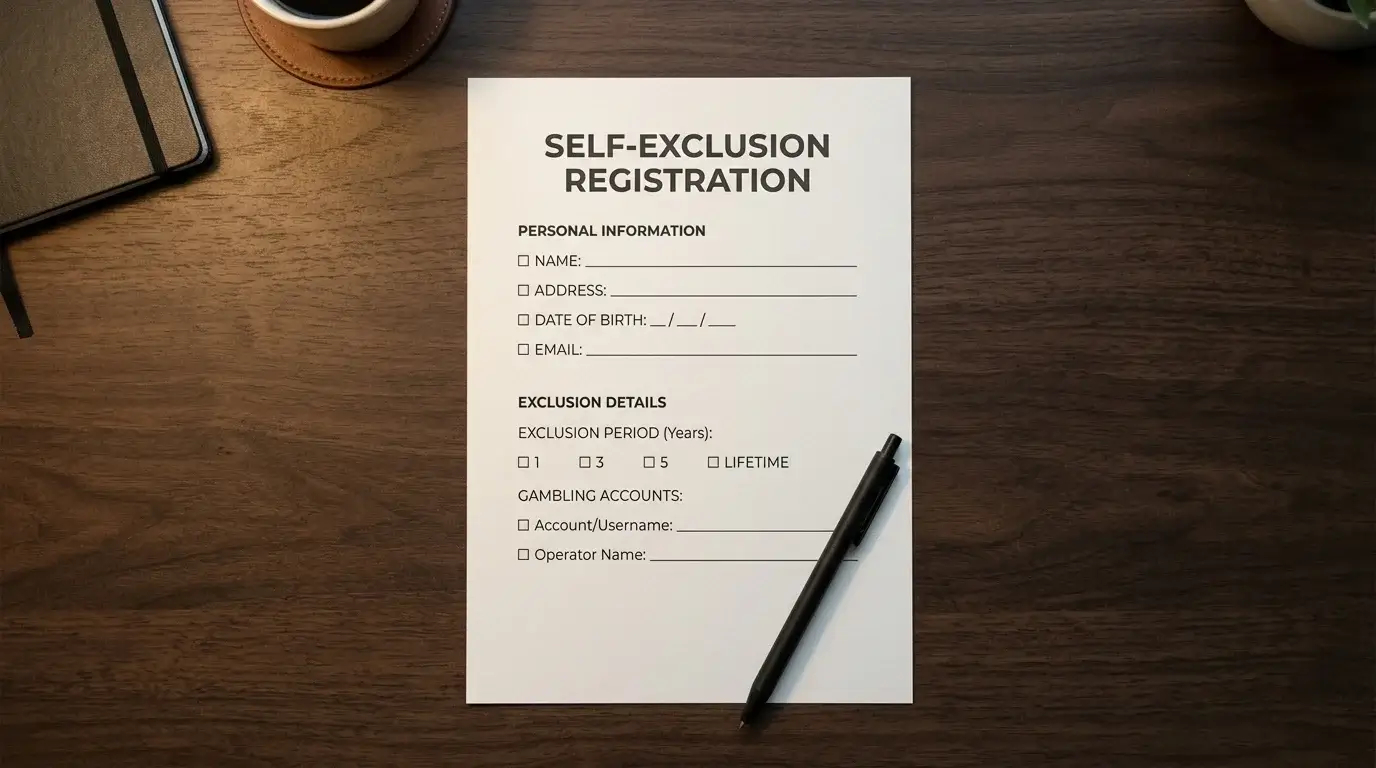
The mechanics of GAMSTOP are simpler than most people assume before they use it. You register once at the central GAMSTOP system with personal details — name, date of birth, address, mobile, email — and select a self-exclusion period of six months, one year, or five years. The system then propagates your details to every UKGC-licensed online gambling operator in the UK, all of whom are required by their licence conditions to check the GAMSTOP register against signups and existing accounts. Any matching account is suspended. New signups are blocked. The exclusion is comprehensive across the licensed industry, not site-by-site.
The mechanism that gives GAMSTOP its weight is the licence condition rather than the operator’s willingness to cooperate. The Fiona Palmer, who runs GAMSTOP, put the scheme’s relationship to the wider regulatory reform agenda in clear terms — “Online gambling has changed out of all recognition since the 2005 Gambling Act, and we welcome any changes that protect vulnerable individuals, especially younger consumers who make up a significant percentage of our consumer base.” Younger consumers are the demographic most exposed to online betting marketing, and the scheme has been recalibrated several times over its lifespan to handle exactly that segment of the population. The integration with operator systems is now automatic on signup and audited as part of the UKGC’s licensing reviews.
What GAMSTOP covers and what it does not
GAMSTOP covers every UKGC-licensed online gambling site without exception. That includes sportsbooks accepting NHL bets, casino operators, bingo sites, and poker rooms. Land-based betting shops are a separate self-exclusion route operated through MOSES, and the two schemes do not currently share databases, so a bettor wanting full coverage needs to register with both. The biggest coverage gap, and the one most often misunderstood, is that GAMSTOP does not cover offshore sites operating without a UK licence. Those sites either ignore the scheme entirely or claim not to be subject to it — and the customer-protection gap that creates is one of the strongest practical arguments for staying inside the regulated UK sector in the first place.
The structural overlap with other UK consumer-protection tools matters here. GAMSTOP sits alongside the financial vulnerability check regime, which applies at lower deposit thresholds and serves a different purpose — affordability rather than exclusion. The two tools are complementary, not substitutes. I cover the FVC regime in detail in my piece on how the £150 financial vulnerability check threshold applies to NHL betting, and the relevant point for GAMSTOP users is that exclusion is the heavier intervention while the FVC is the lighter, more frequent check that operates in the background of regular deposit activity. Choosing one does not affect the other.
When and how to self-exclude
The decision to self-exclude is personal, and the framing matters more than the mechanics. The pattern I have seen most often among people who use GAMSTOP successfully is that they register before the situation has escalated to financial crisis — when betting has started to occupy more attention or money than they want it to, but well before debt or relationship damage has accumulated. That earlier intervention pattern produces better outcomes than waiting until the situation has become untenable. The scheme is not a punishment or a marker of failure; it is a structural tool that takes the decision out of your hands during periods where decision-making has become unreliable.

The registration itself takes around ten minutes. The GAMSTOP website is the only official registration route — third-party services that claim to expedite the process do not exist and are usually scams. Pick the exclusion period that matches your situation. Six months is enough for a meaningful reset for many people, but the people I have spoken with who have used the scheme tend to find that one year is the period that produces the most durable behavioural change. Five years is the longest option and is meant for people who have decided that ongoing access to UK gambling sites is something they want permanently removed from their reach. The registration cannot be reversed inside the chosen period — that is the point of the tool, and it is the feature that gives the exclusion its weight against your future self’s potential desire to reverse the decision.
Life after the exclusion period ends
When the exclusion period ends, the GAMSTOP record does not automatically clear and your accounts do not automatically reactivate. You have to actively request reactivation, after which a 24-hour cooling-off period applies before the exclusion is lifted across the licensed industry. That friction is intentional. The two-stage reactivation is designed to give the user a final decision point — the choice to come back to UK gambling sites should be deliberate, not automatic, and the cooling-off window gives the brain time to revisit the decision in a less impulsive frame.

For many people, the exclusion is followed by a more cautious return to UK gambling sites with lower deposit limits, time limits, and reality-check notifications enabled from day one. For others, the exclusion is the start of a permanent disengagement, and the licensed industry simply never sees them again. Both outcomes are valid uses of the tool. The thing GAMSTOP cannot do is force a particular outcome — it removes access during the exclusion period, it adds friction at the reactivation point, and beyond that the framework hands the decision back to the individual. The scheme’s role is to provide the structural support; what you do with it is the personal piece.
The case for using GAMSTOP early rather than late
The pattern that has held across nine years of watching how this tool actually plays out in the field is that the people who use GAMSTOP early tend to find the exclusion useful in ways the people who use it late do not. Early use — when betting has started to feel slightly off rather than catastrophically off — produces a reset that often does not need to be repeated. Late use produces a reset that does what it is supposed to do, but is usually followed by the same patterns once the exclusion lifts. The 365,000-plus people who have registered with GAMSTOP cover both ends of that spectrum, and the structural value of the scheme is that it works for both. The thing I want any UK NHL bettor reading this to know is that the tool exists, it is free, it is comprehensive across the licensed sector, and using it does not require a crisis to justify the decision.

Does GAMSTOP cover non-UK-licensed NHL betting sites?
No. The scheme only covers UKGC-licensed operators, who are required by their licence conditions to check the register. Offshore sites without a UK licence are outside the scheme’s scope, which is one of the structural reasons UK-licensed sites offer protections offshore alternatives cannot match.
Can a UK NHL bettor reverse a GAMSTOP self-exclusion before it expires?
No. The exclusion period is fixed once selected and cannot be reversed before the end date. After it expires, reactivation requires an active request and a 24-hour cooling-off window — both features that give the tool its structural weight.
